AI & Team Building
Every industry is racing to add “AI” to its offering. Team building is no exception — but much of what’s appearing in the market is novelty, not transformation. We’ve seen “AI-powered” games where participants prompt chatbots to write songs, invent slogans, or generate team anthems. Fun? Maybe. Transformational? Rarely. At Turnaround, we don’t add technology for headlines — we add it for learning…

Purpose Before Platform
Every industry seems to be racing to add AI to its offering, and team building is no exception. We’ve seen AI-powered games where participants prompt chatbots to write songs, invent slogans or generate team anthems. They can be fun, but the more useful question is what people learn from them and whether that learning changes anything when they get back to work.
At Turnaround, we want technology to help teams understand how they think, decide and work together. Before asking which AI tool to add to a workshop, we need to ask why it belongs there and whose AI the team will actually use. Those questions matter far more than whether we can put “AI-powered” in the title.
Why purpose matters now
The rush to add AI has produced plenty of impressive demonstrations. The harder task is turning that interest into a change in behaviour. A team can leave a workshop excited about what a model can generate without being any better at questioning its output, making a decision together or applying what they have learned.
That is where team learning needs to go further. AI should help reveal how teams think and give them something useful to reflect on. The value comes from what people notice, challenge and carry back into their work.
Start with the model your team can actually use
One of the most overlooked questions in an AI workshop is also one of the simplest: which model should we use? Our answer is the one your IT department gives you access to. Teams need to understand how to think and collaborate with the tools they are actually allowed to use, rather than spend the afternoon touring systems they will never touch again.
Practising with an organisation’s approved AI environment gives the learning a much better chance of transferring into everyday work. People can continue experimenting within the same permissions and constraints on Monday morning. They are learning how to use their own tools responsibly and creatively, with human judgement still doing the important work.
We describe this principle as “Your Model. Our Method.” The workshop should fit the organisation’s approved AI environment. The goal is to help teams think better with the systems available to them, and access needs to be considered as part of the design from the beginning.
A purposeful approach to AI in team building
Our Turnaround AI in Team Building Policy starts with a clear reason for including AI. It should help people gain insight, reflect on their behaviour or question an assumption. Human judgement and team reflection remain central throughout.
There are three useful roles to consider: AI as a co-creator, AI as a coach and AI as an idea shaker. They serve different purposes, and being clear about which role matters to your workshop helps keep the learning focused.
AI as a creative collaborator
As a co-creator, AI can help teams explore ideas, provided they stay actively involved in shaping and judging the result. In AmplifAI, optional AI tasks can be tailored to the organisation’s approved tools. The opportunity is to explore how people work with AI while keeping their own thinking in the process.
Start with a human idea, give the model relevant supporting information and ask it to explore different perspectives or identify blind spots. Then look at what comes back, challenge it and refine the idea together. That cycle of human input, AI contribution and reflection is where the useful collaboration happens.
The learning is in understanding the line between inspiration and dependence. A polished answer is only helpful if the team can judge it and decide what to do with it.
AI as a coach
AI can also support reflection by giving teams another way to examine their assumptions and talk through what happened. Used thoughtfully within an approved environment, it can prompt people to pause, revisit a decision and consider a perspective they may have missed.
The value of this coaching role is in the questions it helps people explore. Teams still need to interpret the response and relate it to their own experience. The aim is to develop a habit of reflection that they can continue after the workshop, using the tools available to them.
AI as an idea shaker
Some of the most useful conversations about AI do not require participants to operate a model at all. AI can provide the context for exploring speed, uncertainty and the pressure to change direction. The activities remain human, while the debrief connects the decisions people made to the demands of an AI-accelerated workplace.
Detour, for example, asks teams to keep adapting and reprioritising as new opportunities appear. That opens a conversation about when to persevere and when to pivot. If technology can now do in seconds what previously took weeks, how do you decide which commitments still make sense? How do you let go of a project after millions have already been invested, and does the organisation see that decision as failure or a timely rescue?
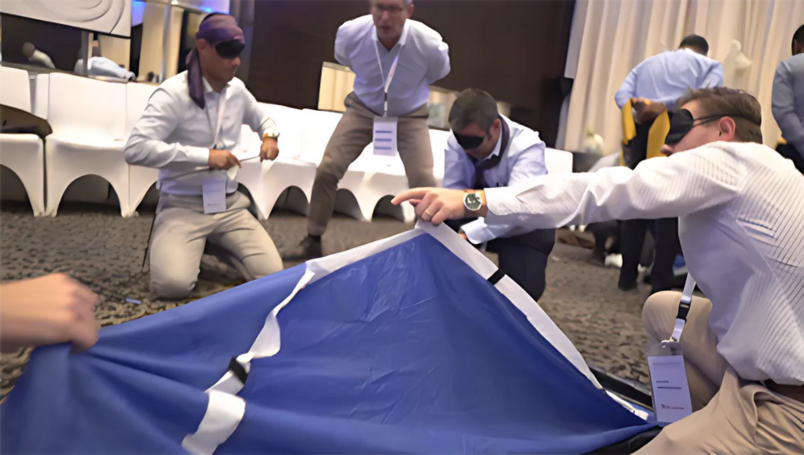
On Shifting Sands gives teams a different way into the conversation. The experience brings out assumptions in communication, the challenge of considering different viewpoints and the work involved in staying aligned under pressure. The debrief can explore how teams maintain stability when information changes, how they keep stakeholders aligned and where AI might help them think through complex decisions.
These examples do not depend on an AI model running in the background. What matters is how people respond and what they recognise in their own behaviour. Guided reflection helps teams connect the experience to how their organisation is adapting to technological change. The learning is about recognising when to change direction, when to stay the course and how to remain composed while making that decision. It helps teams develop agility as a human discipline before disruption forces the issue.
Five questions to ask before adding AI to a workshop
Before deciding that a workshop needs AI, it is worth being clear about what you want it to achieve. These questions help connect the technology to the team’s actual needs.
Why are we including AI at all
Start with the reason for bringing it into the room. If you cannot connect it to a strategic, cultural or behavioural need, it is difficult to know what it adds. A clear purpose gives the activity a direction and makes it easier to judge whether AI is helping.
What outcome do we actually want
Excitement is welcome, but it is not enough to demonstrate learning. Be clear about what you want people to understand or do differently after the experience. That outcome should guide the workshop design.
Is AI helping us teach the message
Consider whether AI is helping people see their own thinking more clearly or drawing attention away from it. What the model generates should give the team something useful to discuss, question or work with. The activity needs to stay connected to the message you want people to take away.
How ready are we culturally and practically
Readiness includes how people think about AI as well as whether they can access it. Consider the team’s willingness to question assumptions alongside the organisation’s policies and approved tools. A workshop should reflect the conditions people work within, including the systems they will be able to use afterwards.
What happens the day after
Think about how people will apply the learning when they return to work. Demonstrating an AI tool is relatively easy. Helping a team develop a practice it can repeat takes more thought, and that connection needs to be part of the design.
Five questions to ask your agency
Your agency should be able to explain how the experience connects to the outcome you want, how reflection will work and how the learning can continue afterwards. The following questions are a useful starting point.
How does AI serve the learning outcome
Ask the agency to explain the link between AI and the behavioural or cultural change you are seeking, including how that impact can be measured. An AI theme alone does not establish that link. You should be able to understand what participants are meant to learn and how the activity helps them get there.
What role does AI play
Is it helping teams create ideas, supporting reflection or providing a context for exploring change? A clear answer helps you understand the design and judge whether that role fits your needs.
How will reflection be built in
Ask how facilitators will draw insight from what happens during the activity, including what teams do with anything AI generates. The debrief is where participants can connect the experience to their own choices and ways of working.
How does this fit our culture and approved tools
Check that the workshop fits your organisation’s policies and the systems your teams can access. If hands-on AI use is part of the learning, ask how people will continue using those skills within their approved environment. The answer should reflect the reality of work after the event.
What happens after the event
Ask how the experience connects back to your strategy, culture or KPIs. That connection helps you judge whether the workshop is contributing to development and what you want the team to do next.
Purpose before platform
AI can amplify habits that already exist within a team, including the ones that need to change. At Turnaround, we use it where it helps people understand their thinking, strengthen reflection and develop learning they can apply. The technology is useful when it gives people a clearer view of how they work together.
Before your next offsite, ask whether you are using AI to impress people or help them improve. The answer should shape the experience you choose and what you expect to happen afterwards.
About Turnaround
Turnaround designs experiential learning programmes in the Middle East, using simulations and workshops to help teams align, collaborate and lead. Our programmes connect the experience in the room to how people work together in their organisations.